
Discover Energy
The Strange New Geography of European Gas
When an LNG tanker docks at Rotterdam, the consequences ripple across Vienna, Berlin, Budapest, and beyond. A short history of how Europe’s gas map has been redrawn since 2022.
Reading time: about 11 minutes · From the Discover Energy series
A ship arrives
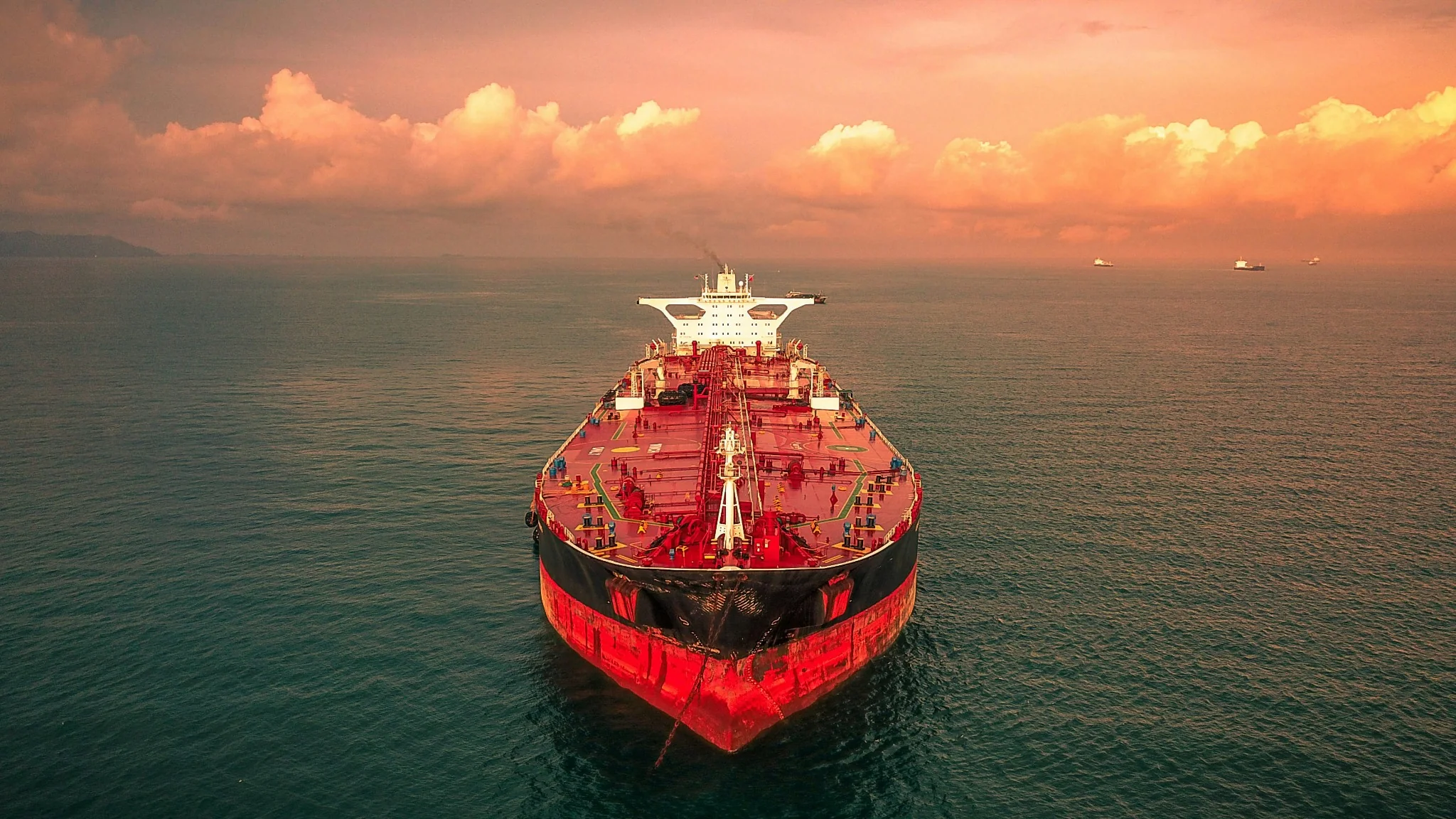
On a grey morning at the Maasvlakte 2 terminal in the Port of Rotterdam, an enormous tanker is approaching its berth. The vessel is roughly 290 metres long — close to three football pitches placed end to end — and its hull rides high in the water despite being heavily laden. Inside its insulated tanks, held at minus one hundred sixty-two degrees Celsius, are approximately 165,000 cubic metres of liquefied natural gas. When this cargo is regasified and injected into the European gas network, it will be enough to heat several million European homes for a day, or to fuel a significant share of European industrial consumption.
Five years ago, the arrival of this ship would have been an unremarkable event. Five years ago, Europe’s gas economy ran primarily on pipeline imports, and ships like this one were a useful supplement but not a structural pillar. Today, the same arrival is one moment in a continuously running flow that has reshaped the entire continental energy system — quietly, expensively, and at a pace that would have seemed impossible to nearly every European energy expert as recently as January 2022.
This essay is about that reshaping. It is the story of how Europe’s gas map has been redrawn since 2022, why the changes have been more profound than they first appeared, and why an ordinary morning in Rotterdam now has direct consequences for industrial workers in Slovakia, for households in Hungary, and for natural gas traders in Vienna and Zug.
The old map
To understand what changed, we should briefly look at what the gas map of Europe looked like before 2022. The European gas system had developed over six decades into a configuration that depended heavily on a few large pipeline corridors. The largest of these corridors brought natural gas from Russia through Ukraine and Belarus into Central Europe, and onwards into Western Europe. Additional pipelines connected Norway to the United Kingdom and the Continent. Smaller but significant volumes arrived from Algeria into Spain and Italy. A modest fleet of LNG terminals around the European coastline — in France, Spain, Italy, the Netherlands, the United Kingdom, and a few other countries — provided supplementary capacity, primarily as a balancing resource.
The result was a system in which roughly forty percent of European Union gas imports came from Russia via pipeline; together with Russian liquefied natural gas, the total Russian share was around forty-five percent. The figure varied by country. For Hungary, the Czech Republic, Slovakia, Austria, and several smaller markets, the share was higher still — often above seventy percent. The infrastructure had been built for this configuration. Gas in those pipelines flowed primarily west and south. The interconnections between Central European national grids were optimised for receiving gas from the east. The system was not designed for the alternative case.
This had not been seen as a particular risk, because the alternative case had not occurred. Russian pipeline gas had flowed reliably to Europe through every period of Cold War tension, every Gulf War, every European political crisis. There were brief disruptions — notably during pricing disputes between Russia and Ukraine in 2006 and 2009 — but the basic infrastructure had remained functional. The European Union had encouraged some diversification of supply over the years, but the structural change had been slow.
Then, in February 2022, the structural change accelerated.
What happened, and what came after
The geopolitical disruption that began with the war in Ukraine in February 2022 had consequences for European gas that unfolded in stages rather than all at once. Through the spring of 2022, Russian pipeline gas continued to flow at substantially reduced levels. Through the summer, the flows reduced further as Russia and various European customers entered into commercial and political disputes about pricing, payment currencies, and contractual interpretations. In late August, the Nord Stream 1 pipeline — which had been the largest single conduit of Russian pipeline gas into Western Europe — ceased operating. In September, that pipeline (and its parallel Nord Stream 2, which had been completed but never commercially commissioned) was physically damaged in a sabotage incident, the responsibility for which remains the subject of investigation. From late 2022 onward, the volume of Russian pipeline gas flowing to Europe collapsed to a fraction of its previous level. The remaining transit of Russian gas through Ukraine ceased at the start of 2025, when the transit agreement expired — closing the corridor that had defined the region’s supply for half a century.
The European Union and its member states responded with a combination of policy measures and market adjustments. Some of these measures were dramatic. New LNG receiving terminals were commissioned at extraordinary speed in Germany — at Wilhelmshaven and Brunsbüttel — using floating regasification units that could begin operation within months rather than the years typically required for fixed terminals. Existing terminals in the Netherlands, Belgium, France, Italy, and Spain operated at maximum utilisation. Storage facilities, which had historically been managed primarily on a commercial basis, came under new regulatory requirements: the European Union introduced binding storage-filling targets — initially at least ninety percent of capacity by early November — which were substantially met in the years that followed. The regime has since been extended to the end of 2027 and made more flexible: the ninety percent target remains, but it may now be met at any point between 1 October and 1 December, with a deviation of up to ten percentage points where market conditions are unfavourable — which the Commission may increase by a further five percentage points through a delegated act — and the intermediate targets have become indicative.
The combined effect was that European gas consumption was supplied, by 2024, from a profoundly different mix of sources than in 2021. Gas of Russian origin, which had accounted for roughly forty-five percent of EU imports, fell in aggregate to approximately twenty percent — and within that residual share, an increasing portion arrived in liquefied rather than pipeline form. Norwegian pipeline gas, which had previously been the second-largest source, became the largest single source, supplying roughly thirty percent of EU imports. LNG imports, primarily from the United States and Qatar but also from a range of other suppliers, rose from roughly twenty percent of imports to approximately thirty-five to forty percent. Algerian pipeline gas and smaller flows from Azerbaijan and other origins made up the balance.
The decline continued in 2025. After Ukrainian transit ended in January, the Russian share fell to around twelve percent of EU gas imports; of that, pipeline gas accounted for about six percent, now exclusively via the TurkStream route, with the remainder arriving as liquefied natural gas.
This was an enormous restructuring, accomplished over approximately twenty-four months, in a system that most observers had previously considered structurally inflexible.
The new internal geography
Look at a map of Europe and trace the flows of gas in 2021. The dominant directions were east-to-west and east-to-south: gas entered the system in Ukraine, Poland, the Baltic states, and Finland, and flowed toward Central, Western, and Southern European customers. Now trace the flows in 2024. The dominant directions have reversed in several corridors. Gas now enters the system primarily through the LNG terminals on the Atlantic and North Sea coasts — Rotterdam, Wilhelmshaven, Brunsbüttel, Dunkirk, Zeebrugge, Le Havre, Sines, Barcelona — and flows eastward and southward to consumers across the continent.
This sounds like a small change in arrows on a map. In practice, it is a substantial change in physical reality. The European gas pipeline network was not built for these flow directions. Pipelines that were configured to flow east-to-west now flow west-to-east, which requires compression stations to be operated in the opposite direction (where this is technically possible), pressure regimes to be reconfigured, and contractual capacity allocations to be renegotiated. The European Network of Transmission System Operators for Gas (ENTSOG) has coordinated much of this technical work. National regulators have updated their tariff regimes to reflect the new realities. Cross-border interconnection capacities have been expanded where bottlenecks emerged.
Within this restructured physical system, certain trading hubs have grown in importance while others have declined. The Title Transfer Facility (TTF) in the Netherlands has consolidated its position as the European benchmark hub, and its prices now serve as a reference point for global LNG markets as well. The proximity of the TTF to the major Dutch LNG terminals (and to the connection points of Norwegian pipeline gas) has placed it at the geographic centre of the new supply geography. Trading Hub Europe (THE) in Germany, formed in 2021 from the merger of two predecessor hubs, has also gained prominence as German LNG infrastructure has come online. The Central European Gas Hub (CEGH) in Vienna, historically the principal trading point for Central and South-Eastern Europe, has retained its strategic position but with a transformed flow pattern: gas now reaches the CEGH primarily from the west and northwest, rather than from the east.
Why Central Europe matters in this story
For most of the post-Cold War period, Central Europe — the region encompassing Austria, the Czech Republic, Slovakia, Hungary, and several neighbouring markets — sat at the receiving end of the eastern pipeline corridor. Gas arrived from Russia via Ukraine, entered the CEGH and connected national systems, and was distributed to industrial customers, district heating utilities, and households across the region. The infrastructure, the commercial relationships, and the regulatory frameworks had all developed within this configuration.
The restructuring since 2022 has been particularly consequential for this region. The flow direction has reversed: gas now arrives in Central Europe primarily from the west and northwest, having travelled from LNG terminals in the Netherlands and Germany, and from Norwegian pipeline imports. The cost of bringing gas to Central Europe has changed accordingly, because the gas now travels longer distances through the European pipeline network from its point of entry to its point of consumption. Storage facilities in Austria, Slovakia, and Hungary, which had historically been filled from the east, are now filled primarily from the west. Trading patterns at the CEGH have evolved to reflect these new realities.
For energy trading houses active in Central Europe — including SANIA Power AG and its Slovak subsidiary, both of which are CEGH members — the period since 2022 has been one of significant operational adjustment. New supply patterns required new commercial relationships, new contractual structures, and new approaches to balancing and storage. The trading function in this transformed market is fundamentally the same as it was before 2022, but the underlying physical and contractual reality has shifted, and the work of staying current with that reality is continuous.
A pause to consider the scale of the change
Step back, for a moment, from the technical details and the chronology.
In a period of roughly twenty-four months, a continental energy system supplying close to four hundred and fifty million people reorganised the geographic origin of nearly half of its primary energy supply. This is, by any reasonable measure, an extraordinary undertaking. Industrial systems of this scale typically reconfigure over decades. Pipeline networks are designed for thirty-to-fifty-year lifetimes. The contractual relationships between gas producers and consumers are typically multi-decade arrangements. None of this is supposed to be flexible on a two-year timescale, and yet, in the relevant respects, it was.
The cost of this restructuring has been substantial. The European Union’s gas import bill in 2022 reached approximately USD four hundred billion — three times the previous year’s level — reflecting both the price volatility of the period and the additional infrastructure and contractual costs of the transition. European industrial energy costs rose to levels that have triggered structural questions about the competitiveness of European manufacturing, particularly in energy-intensive sectors such as steel, aluminium, fertilisers, and chemicals. Households in many European countries experienced gas and electricity price increases that, even after subsequent moderation, remain meaningfully above pre-2022 levels.
But the system held. Through the winters from 2022 to 2025, no European country experienced physical gas shortages, and no European industrial site was forced to cease operations because of physical gas unavailability (although many adjusted operations in response to high prices). The reliability of supply was preserved, even as the geography of supply was being redrawn beneath the surface.
This is, in its way, a remarkable institutional and engineering achievement — accomplished by the combined work of European Union institutions, national governments, transmission system operators, pipeline operators, LNG terminal operators, storage operators, gas producers and importers worldwide, and the network of trading houses that connect all of these participants commercially.
Looking ahead
The reshaping of European gas geography is not complete. Additional LNG terminal capacity is under construction in several countries. New cross-border interconnection projects are advancing. Storage strategies are being refined. And the political direction has now been fixed in law: in January 2026 the European Union adopted Regulation (EU) 2026/261, which progressively prohibits imports of Russian liquefied and pipeline natural gas: the prohibition became applicable in March 2026, with transition periods for existing contracts — LNG under short-term contracts expiring on 25 April 2026, pipeline gas under short-term contracts on 17 June 2026, long-term LNG contracts on 1 January 2027, and long-term pipeline contracts on 30 September 2027. The alternative date of 1 November 2027 applies only in a Member State for which the European Commission, by an implementing decision adopted no later than 15 September 2027, confirms a risk of missing the 2027 underground-gas-storage filling target, provided the contractual basis is demonstrated to the authorising authorities. The role of natural gas in the longer-term European energy transition remains under active debate — with some scenarios envisaging significant gas demand reduction through electrification and efficiency, and others reserving a substantial long-term role for natural gas (and, eventually, low-carbon gases such as hydrogen and biomethane) in industrial processes, district heating, and back-up power generation.
For the moment, the practical reality is that European gas now arrives primarily from a different geographic direction than it did five years ago, that the price-setting mechanisms are now centred at TTF rather than at the older Russian-pipeline-linked benchmarks, and that the commercial relationships of every European gas market participant have been reshaped accordingly. The map has been redrawn, and the new map will continue to evolve.
A modest hope
We hope this essay has done two things. First, we hope it has made the recent restructuring of European gas geography more concrete and understandable than it typically appears in news coverage of energy policy. The change has been large, fast, and durable, and it deserves to be understood as a single coherent story rather than a sequence of isolated headlines. Second, we hope it has illustrated how deeply intertwined the energy system is with the political and economic life of the continent — and how the work of moving energy from where it is produced to where it is consumed, while often invisible, is one of the central practical activities by which modern Europe functions.
If you found this essay useful, the other instalments of the Discover Energy series explore other dimensions of the same system. How the grid transfers electrical energy from generators to your light switch. The stress of a cold Tuesday morning in Berlin. Why electricity prices sometimes fall below zero on sunny afternoons. The invisible market in green certificates and carbon allowances. We hope you will read them.
For more technical depth on the European energy market structure, please see our European Energy Markets page. For the underlying mechanics of trading, please see Energy Trading Explained.